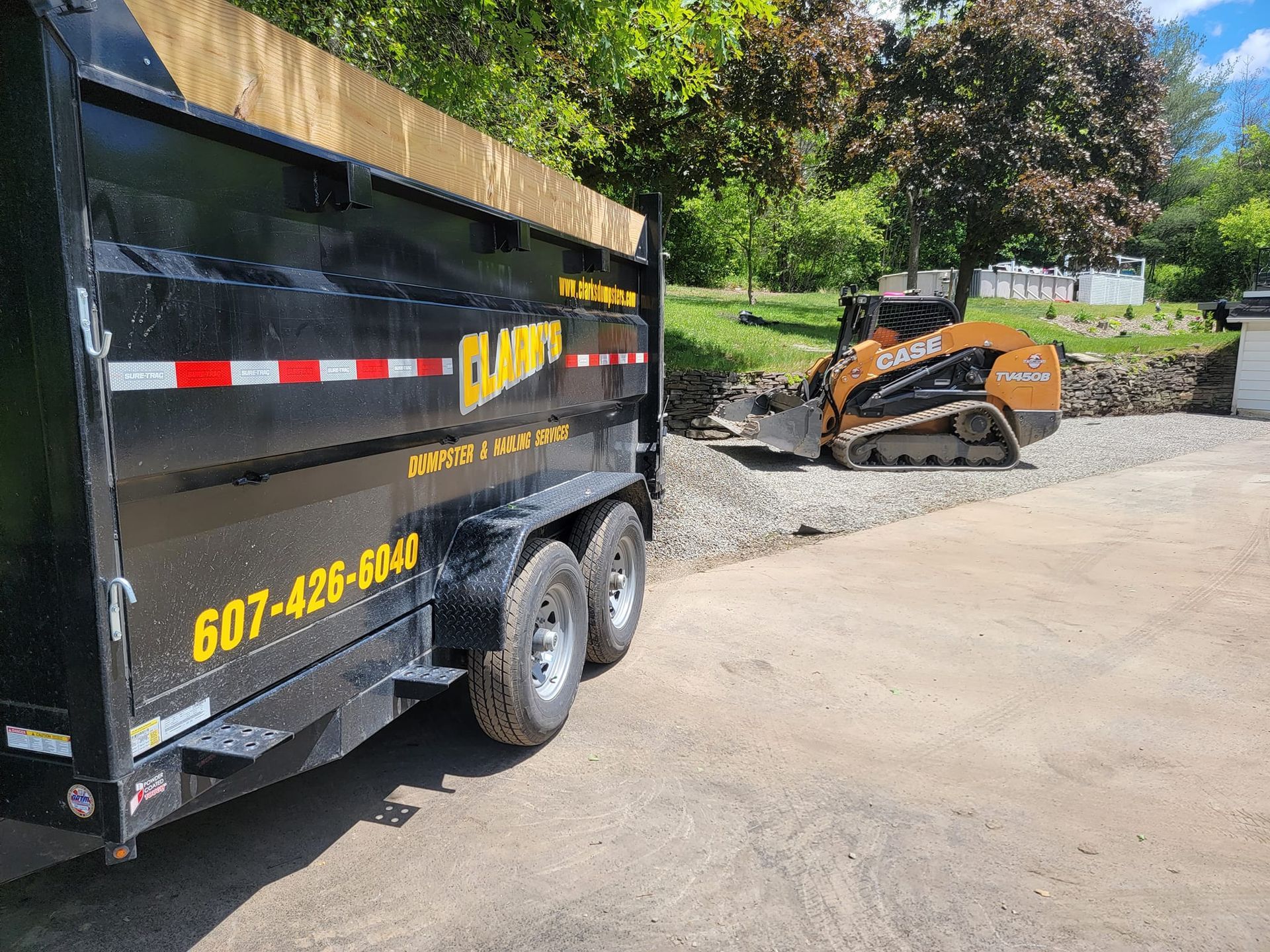
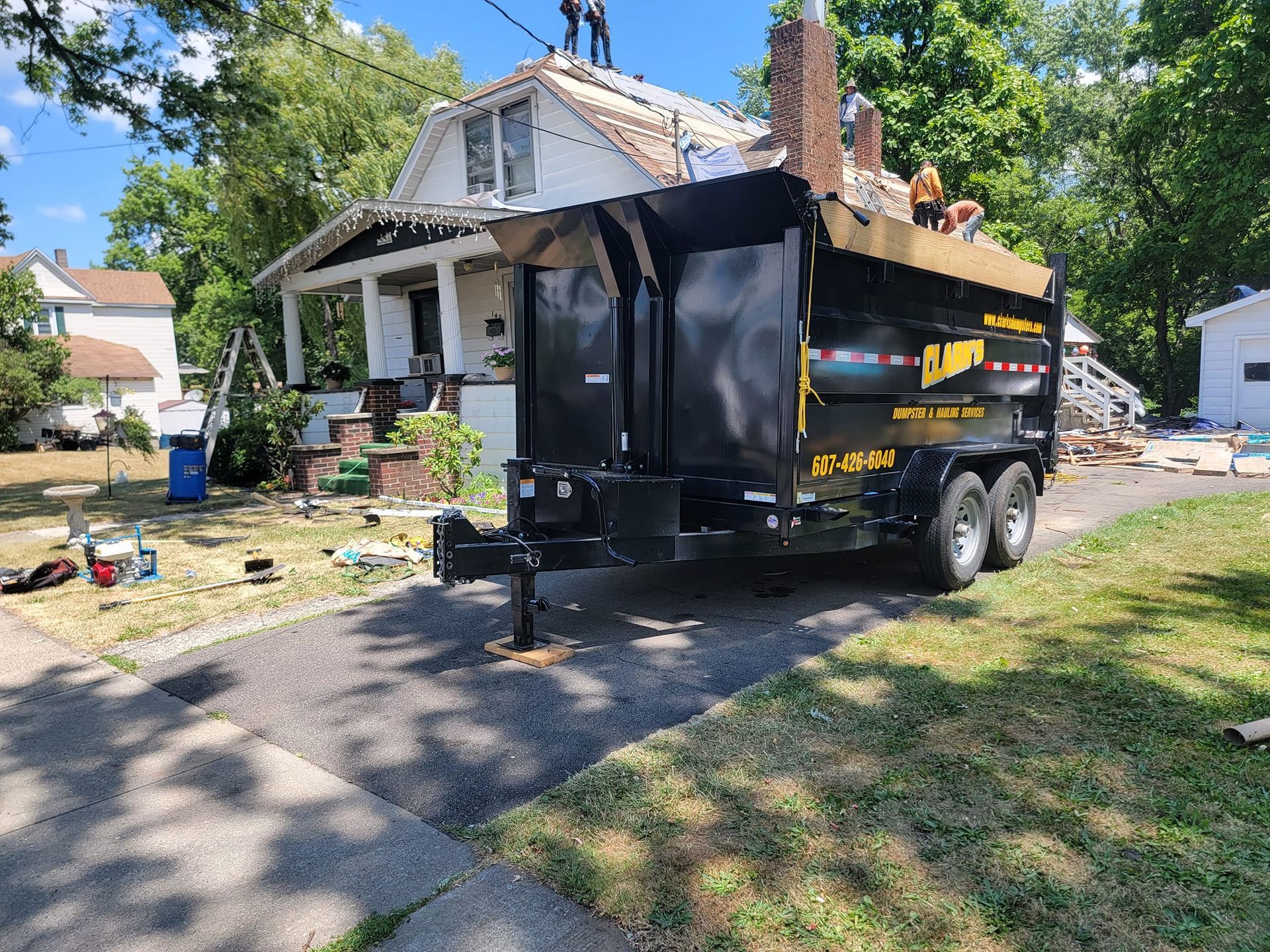
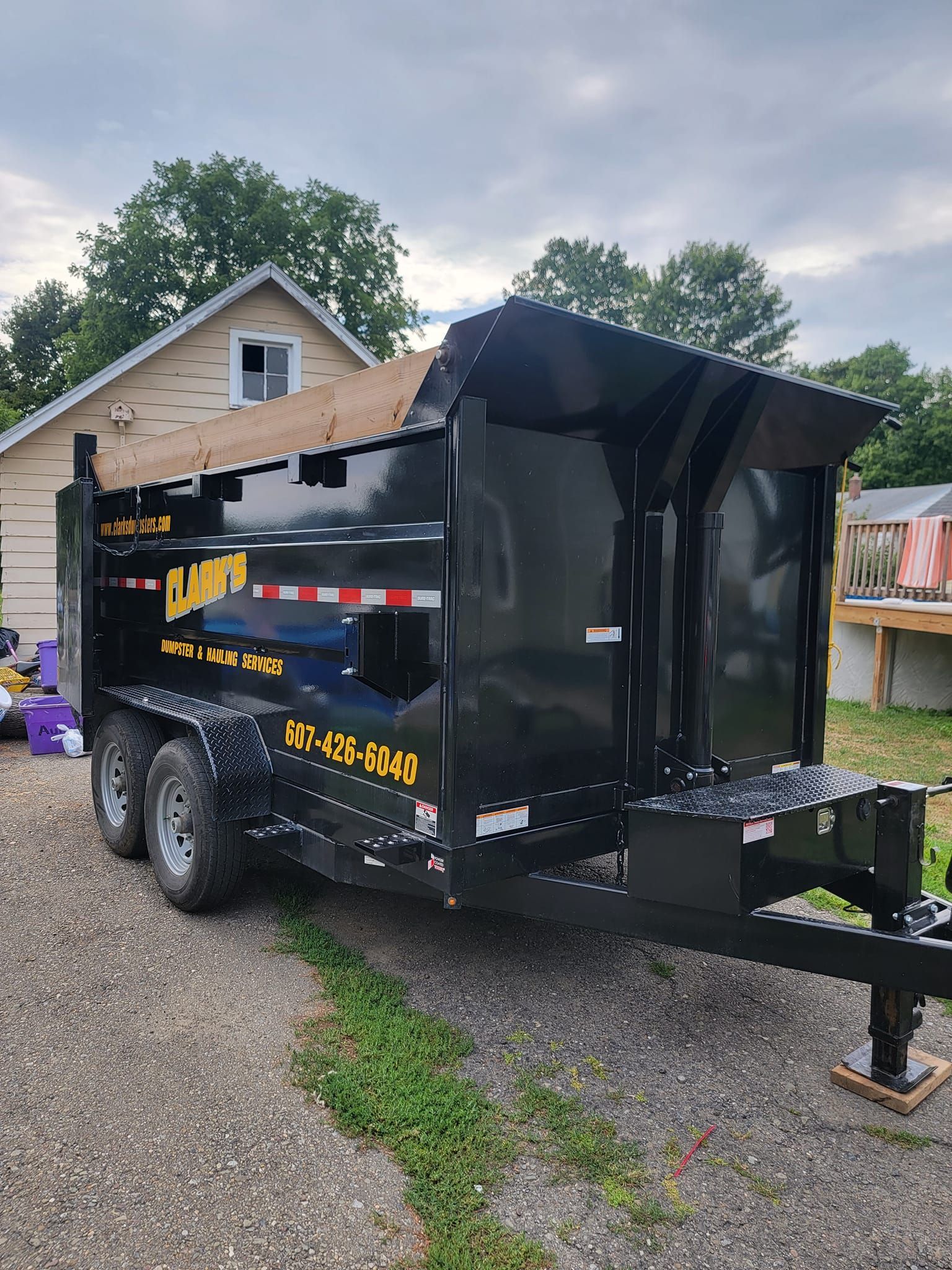
Renting a roll-off dumpster in Ithaca NY comes with one number most people overlook: the weight limit. Volume matters, but weight is what actually drives your final bill. Go over your included tonnage and you'll see an overage charge that can surprise you at pickup. Here's how to avoid that completely.
Weight Limits Are the Hidden Variable in Dumpster Rentals
Most people size a dumpster by volume. That makes sense — you're looking at a pile of stuff and trying to figure out if it fits. But haulers don't just charge for the space a bin takes up. They charge for the weight of what's inside it. Every rental includes a baseline weight allowance. Go over that and the per-ton overage charge kicks in. It's calculated at pickup when the truck hits the scale.
In Ithaca, this is especially relevant because of the types of debris common to the area. Older homes produce heavier renovation debris — real plaster walls instead of drywall, old clay drainage tile, poured concrete foundations. Demo from pre-1970 construction tends to be significantly heavier per cubic yard than modern materials. Knowing this ahead of time lets you plan accordingly rather than guessing and paying for it later. Local Ithaca-area haulers
can give you specifics on their weight allowances at booking — always ask before you commit.
Bin Sizes and Weight Realities for Ithaca Projects
Here's how each bin size maps to typical Ithaca project scenarios, keeping weight in mind alongside volume:
- 10-yard:
About 3 to 4 pickup truck loads by volume. Weight limit is generally on the lower end for this size. Best for light residential debris — general junk, furniture, light renovation material. Don't pack it with plaster or concrete or you'll hit the weight ceiling well before the bin looks full.
- 15-yard:
Around 4 to 5 pickup truck loads. More room than a 10, with a proportionally higher weight allowance. Works well for mid-size cleanouts where the material is moderately heavy. A deck removal or mixed household junk cleanout fits here without major weight concerns.
- 20-yard:
Covers 6 to 8 pickup truck loads. The most popular all-around size for Ithaca home renovations, roofing jobs, and large cleanouts. Roofing shingles are heavy — a 20-yard loaded primarily with shingles can approach its weight limit faster than homeowners expect.
- 30-yard:
About 9 to 11 pickup truck loads. Used for large construction or whole-home cleanouts. Higher weight allowance but still a limit. Good for mixed debris loads where volume is the main concern and material is a blend of light and heavy.
- 40-yard:
Holds 12 to 14 pickup truck loads. The largest available, with the highest weight allowance. Even so, loading a 40-yard primarily with concrete or soil will exceed the limit. Heavy, dense materials should be managed in dedicated hauls or smaller bins to stay within weight restrictions.
Weight limits are set by the hauler and vary. Pricing starts at different levels by size and haul weight — season, demand, and material type all affect the final number. Confirm your included tonnage and your per-ton overage rate at booking so there are no surprises.
How Ithaca's Housing Stock Affects Your Debris Weight
The Cornell area and surrounding neighborhoods in Ithaca have a significant percentage of pre-1940 housing stock. These homes were built with different methods and materials than what goes up today. Plaster walls, for instance, weigh significantly more than modern drywall. A single room of plaster can generate debris that approaches the weight limit of a 10-yard bin even though the volume looks modest. If you're doing a plaster removal, plan for that weight and either size up or commit to a higher-weight-allowance rental from the start.
Concrete and masonry are the other big ones. Ithaca basements and foundations often involve poured concrete, stone, or old brick — among the heaviest debris types per cubic foot. A relatively small pile of concrete chunks can weigh thousands of pounds. Some haulers require a separate bin designated for heavy material loads only.
Practical Steps to Stay Under the Weight Limit
Ask about the weight limit before you book, not after.
Call or request your quote and ask specifically: what is the included tonnage for this bin size, and what is the overage rate per ton? Write it down. That number determines how you load.
Know your heavy materials by name.
Concrete, brick, tile, plaster, soil, roofing shingles, and stone are the categories that will get you in trouble. These materials are dense. A cubic yard of concrete weighs roughly two tons. A cubic yard of general household junk might weigh 300 to 500 pounds. The difference is dramatic.
Rough weight estimates by material type:
Concrete: ~3,800 lbs per cubic yard. Roofing shingles: ~750 to 1,500 lbs per cubic yard depending on layers. General household junk: ~300 to 500 lbs per cubic yard. Drywall: ~500 lbs per cubic yard. Dirt: ~2,200 lbs per cubic yard. These are estimates — actual weight varies by moisture content and density. Use them for planning, not billing.
Load light materials on top of heavy ones.
This isn't just about weight distribution — it helps you visually track how much heavy material has gone in. Once your heavy layer is down, switch to lighter materials to finish filling the bin without adding much weight.
Consider a dedicated heavy-debris haul.
If your project involves significant concrete or masonry, ask about bins specifically rated for heavy loads. Some haulers offer adjusted weight allowances for these. Explore Ithaca-area options
to compare how providers handle heavy-material rentals.
Describe your debris type honestly at booking.
This is your protection. If you tell the hauler you're loading mixed household junk and then they arrive to find a bin full of concrete, you're at risk of a disputed quote or an overage that could have been priced in from the start. Accurate descriptions lead to accurate quotes.
Fill to the top but not over it.
Overfilling isn't just a weight issue — it's a safety issue. Most roll-off rentals prohibit loading material above the rim of the bin. The bin must be covered for transport. Stay within the visible fill line as well as the weight limit.
Mistakes That Drive Up the Final Bill
Assuming all debris weighs about the same is the most expensive mistake you can make on a dumpster rental. People see a bin that looks half-full and assume they're well within the limit. But if that half-full bin is loaded with tile, plaster, and broken concrete, it may already be at or near the weight ceiling. Volume and weight are two separate measures. Both matter.
Ignoring the per-ton overage rate at booking is the second costly error. That rate is disclosed at booking — but many customers don't ask for it or don't write it down. Then at pickup, the truck comes back from the scale and the invoice includes a line item they weren't expecting. Ask for the overage rate upfront and treat it as real information, not boilerplate.
Mixing heavy and light debris without thinking about it is the third problem. Tile, old fixtures, and drywall from a bathroom remodel all go in together — but tile is far heavier than drywall. Knowing which parts of your project generate the heavy stuff lets you monitor the load and stay in control of the final number. Talk through your project with Ithaca-area dumpster providers
to get a quote that reflects your actual debris mix.
Frequently Asked Questions
How do I find out the weight limit for a specific bin size?
Ask when you book. Weight limits are set by each hauler and vary by company and bin size. Some haulers list included tonnage on their quote; others tell you verbally. Either way, get the number in writing on your rental agreement so both sides are clear. Don't assume — ask directly.
What happens if I go over the weight limit on my rental?
The truck goes to the scale at the landfill on the way out. If your bin comes in over the included tonnage, you're charged a per-ton overage fee. The rate varies by hauler and will show up on your final invoice. Ask for that rate at booking so it's not a surprise.
Can I put concrete or brick in a standard roll-off dumpster?
Often yes, in small amounts mixed with other debris. A bin loaded primarily with concrete will almost certainly exceed weight limits. Some haulers require a dedicated heavy-material container for large concrete loads. Describe your debris mix at booking and your hauler will advise on the right approach.
Does roofing material count as heavy debris?
Yes. Asphalt shingles, especially multiple layers from an older roof, are one of the most common sources of unexpected weight overages. A 20-yard bin loaded primarily with shingles can hit its weight limit at around 60 to 70 percent visual capacity. Tell your hauler at booking if roofing is your primary material.
Book Smarter: Get the Weight Right From the Start
Weight limits aren't a trick. They're a real constraint that affects your final cost. Homeowners and contractors who avoid overage charges ask the right questions at booking, describe their debris honestly, and load with weight awareness. That simple shift pays off directly.
Ithaca projects — especially in older homes with plaster, concrete, and masonry — require a bit more weight planning than a newer-construction cleanout. But the steps aren't complicated. Know your materials. Ask about tonnage. Load smart. When you're ready to book, check dumpster availability and pricing for Ithaca and Tompkins County here.
Skip the Overage Fee. Book the Right Bin for Your Ithaca Project.
Know your weight. Pick your size. Get a quote that reflects your actual debris load. No surprises at the scale.
Get My Ithaca Dumpster Quote